
AEG Dishwasher Overflowing? How a Blocked Pressure Hose Caused the Fault
A fairly new AEG dishwasher kept overflowing and setting off its flood protection. Here's how our engineer traced it to a blocked pressure hose, how we fixed it, and what to do if your own dishwasher overflows.
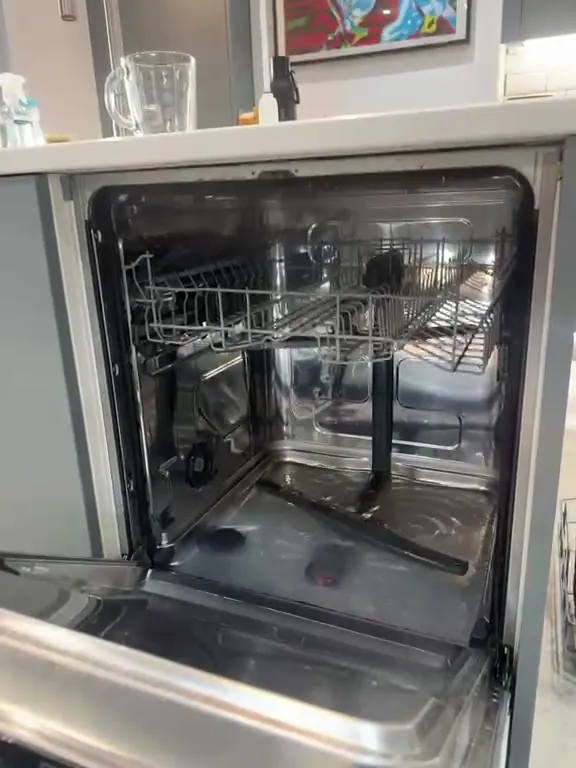
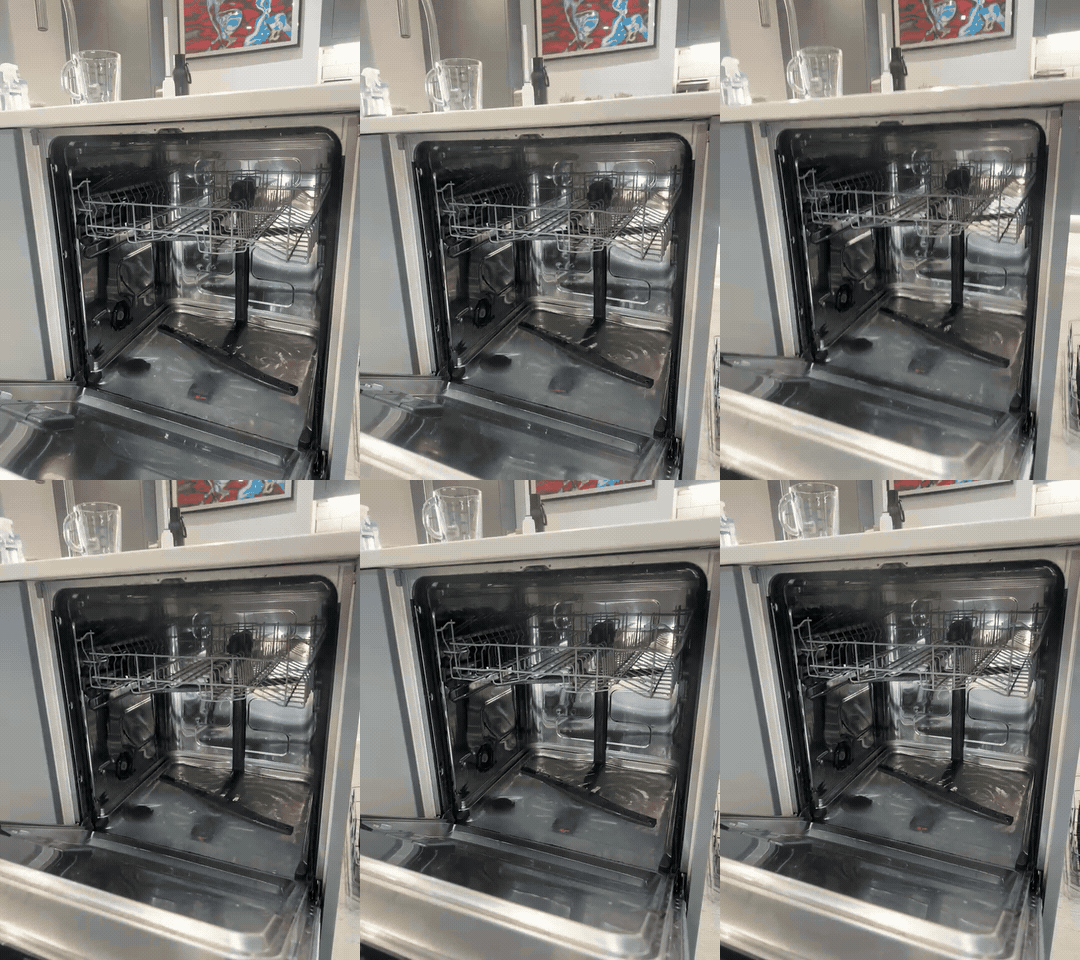
A dishwasher that overflows is more than an inconvenience. Water where it shouldn’t be can damage kitchen units and flooring, and most modern dishwashers will stop working altogether until the problem is fixed.
That’s what happened with one of our customers’ AEG dishwashers. The machine was fairly new, but it kept overflowing. Here’s how our engineer found the cause, and what you can do if your own dishwasher starts doing the same.
The problem: a newer dishwasher that kept overflowing
Every time the dishwasher ran, water ended up where it shouldn’t, and the machine’s flood protection kept stopping it. For a dishwasher that wasn’t old, that pointed to a specific fault rather than general wear.
How a dishwasher’s flood protection works
Underneath most modern dishwashers is a base tray with a small float inside it. Normally the tray is dry. If water leaks or overflows into it, the water lifts the float, which presses a safety switch.
That switch triggers the dishwasher’s flood protection. Depending on the model, the machine will usually stop filling, try to pump water out, and show an error code or warning light. It’s designed to stop a small leak turning into a flooded kitchen.
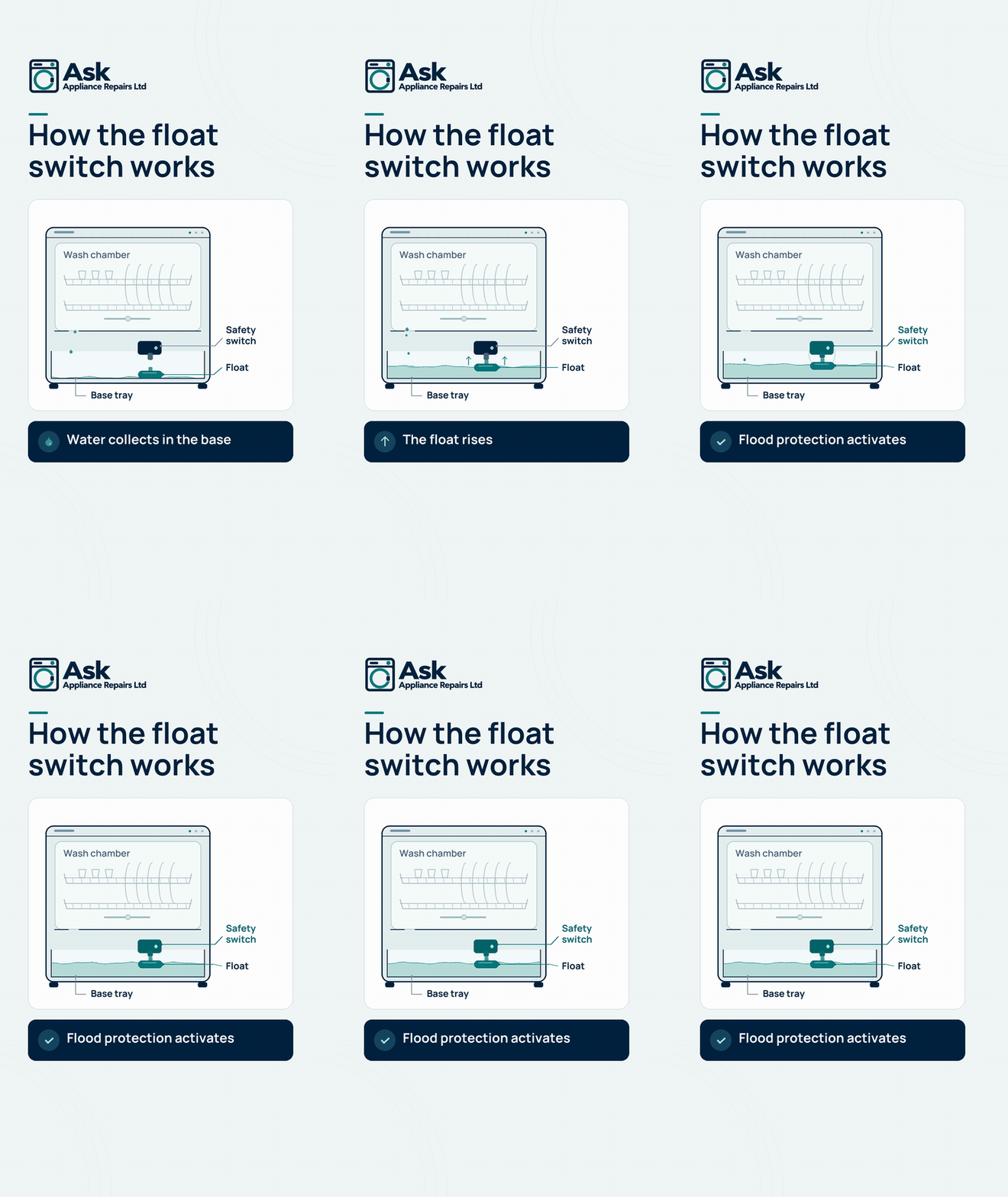
So the float switch was doing its job. The real question was: what was causing the dishwasher to overflow in the first place?
The cause: a blocked pressure hose
Our engineer traced the fault to a blockage in the pressure hose.
The pressure hose is a small tube that helps the dishwasher sense how much water is inside. As the dishwasher fills, the rising water pushes on the air inside the hose, and a pressure sensor at the other end reads that change to work out the water level. Once the reading says the dishwasher is full, the water inlet stops.
When the pressure hose is blocked, that reading becomes unreliable. The dishwasher can’t tell how much water it really holds, so it can keep filling past its normal level. Once that excess water reaches the base, the float switch kicks in and the flood protection stops the machine.
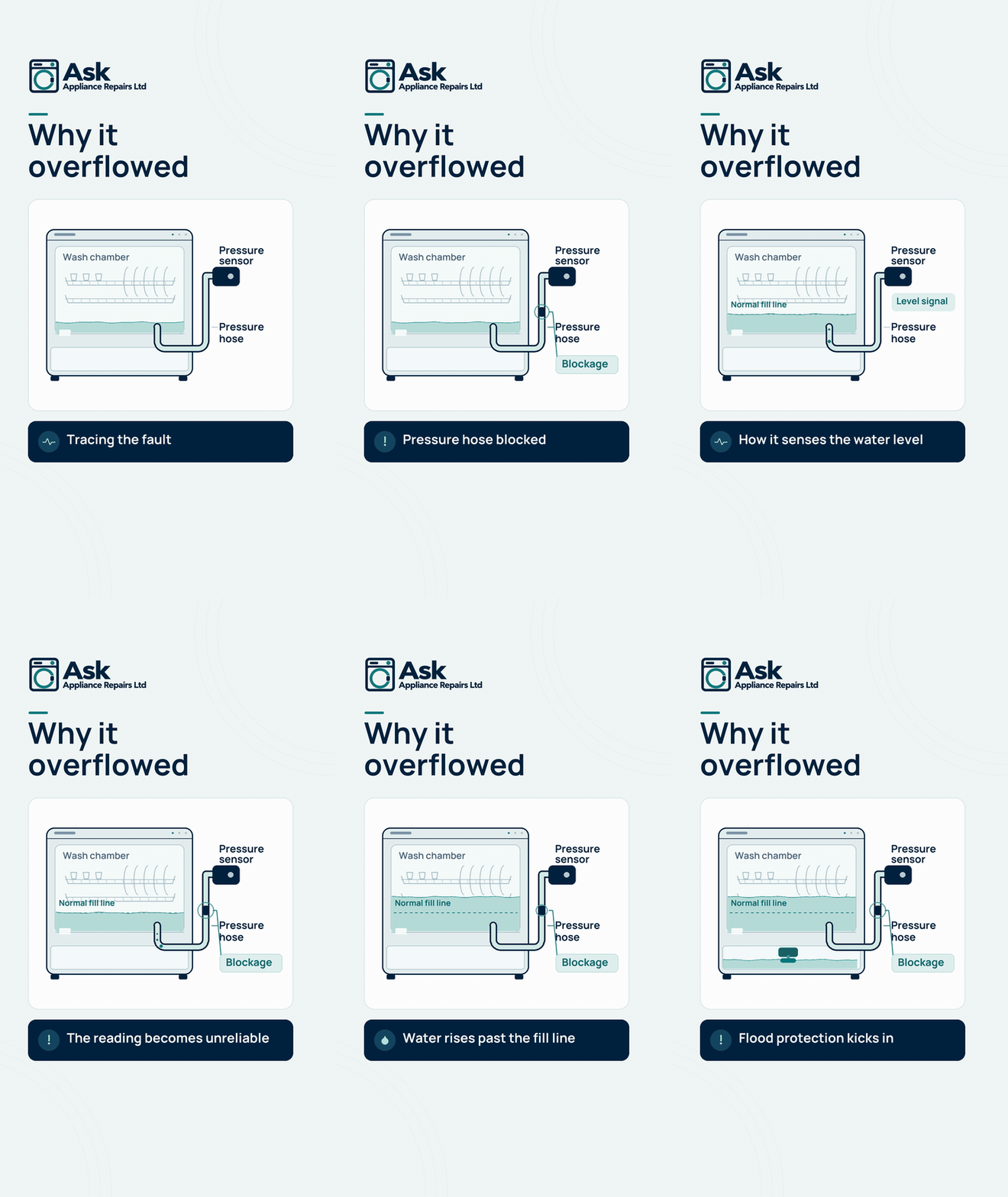
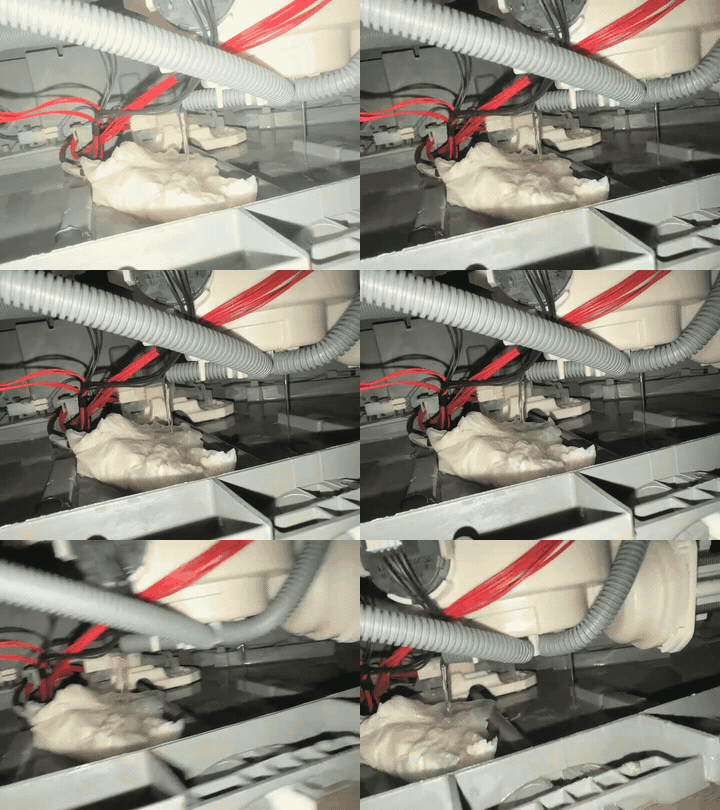
This is a good example of why the obvious fix isn’t always the right one. The float switch and the base tray were where the symptom appeared, but replacing them would not have stopped the overflowing. The fault was upstream, in the part that tells the dishwasher when to stop filling.
The repair: clearing the blockage and testing
We cleared the blockage in the pressure hose, then tested the dishwasher to make sure it was filling normally and that the overflow had stopped.
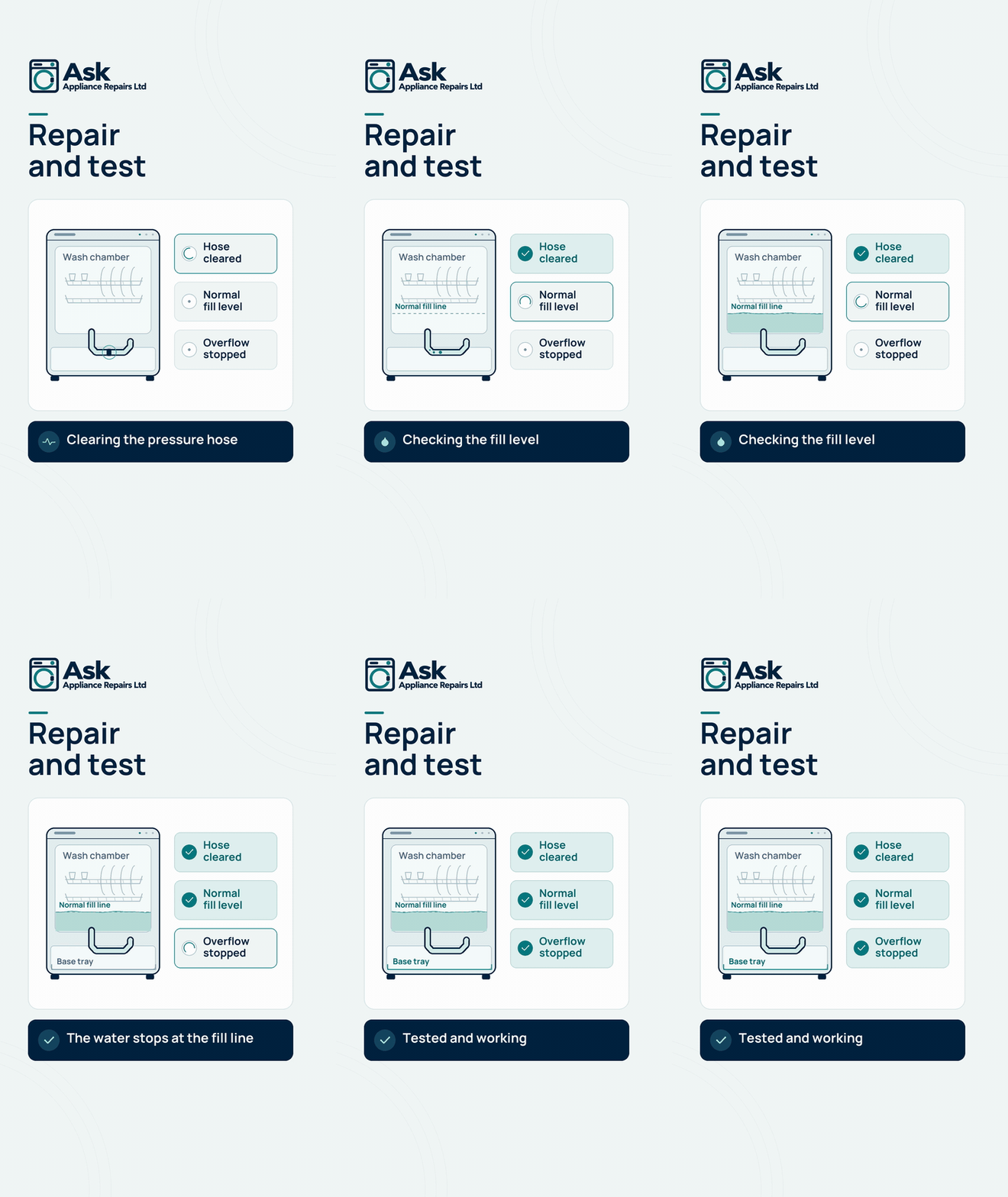
With the pressure hose clear, the dishwasher could read its water level properly again. It filled to the correct level, stopped, and ran without setting off the flood protection. The dishwasher was working properly again.
What to do if your dishwasher is overflowing
If your dishwasher is overflowing, or keeps stopping with a flood or leak warning, here’s what we’d suggest:
- Switch it off and turn off the water supply. The supply valve is usually under the sink or behind a nearby kitchen unit.
- Mop up any water and keep the area dry, especially around electrical sockets and the kickboard.
- Don’t keep restarting it. If the flood protection keeps triggering, there’s a fault to find. Running it again and again risks more water under your units.
- Don’t tip or tilt the dishwasher to empty the base. It’s tempting, but it can push water onto electrical parts.
- Rule out the simple things. Using washing-up liquid instead of dishwasher detergent creates foam that can spill out of the door. Check you’re using the right product, and that the filters at the bottom of the tub are clean.
- Note the error code and model number. The model details are usually printed on a label along the edge of the door. Both help an engineer arrive prepared.
If the dishwasher still overflows after that, the fault is likely inside the machine: a blocked pressure hose like this one, a faulty pressure sensor, an inlet valve that won’t close, or a leaking hose or seal. Those need the dishwasher pulling out and checking, which is a job for an engineer.
Book a dishwasher repair
Our dishwasher repairs start from £75, which covers the on-site fault diagnosis and labour for the approved repair. If a part is needed, we’ll explain what has failed and give you a clear quote for the part before any work goes ahead. Parts are charged separately, and if we need to order one, the return visit to fit it is included.
If your dishwasher is overflowing, call Ask Appliance Repairs on 07340 002079 or book a repair. We cover West London, Slough, Surrey and the surrounding areas, as far as Reading, 8am to 8pm every day.